---
title: What pH should an intimate cleanser have? The complete guide to choosing the right one for every stage of life
description: What pH should an intimate cleanser have? Discover the complete guide to choosing the ideal product for every stage of life, protecting the microbiome, and maintaining your natural intimate balance.
image: https://blog.lasaponaria.it/hubfs/pH_cartina-al-tornasole.jpg
---
- **Shipping in Europe and 1 free sample in each order**
EN
- [IT](https://www.lasaponaria.it)
- [EN](https://www.la-saponaria.com)
- [ES](https://www.lasaponaria.es/)
# [](https://www.la-saponaria.com/)
*clear*
Contact Us
- Call us! [**39 0721 911 004**](tel:390721911004)
- Write to [info@lasaponaria.it](mailto:info@lasaponaria.it)
- Whatsapp [**377 38 44 777**](https://api.whatsapp.com/send?phone=3773844777)
- [Become a reseller](https://www.la-saponaria.com/become-resellers)
- [Test and E-book](https://www.la-saponaria.com/test-and-e-book)
- [Location and contacts](https://www.la-saponaria.com/contacts)
[Store locator](https://www.la-saponaria.com/store-locator)
[Your profile](https://www.la-saponaria.com/my-account)
[View Cart](https://www.la-saponaria.com/cart?action=show)
Menu
- Menu
Back
- [About us](https://www.la-saponaria.com/about-us)
- - space
- - [HISTORY](https://www.la-saponaria.com/our-history)
[ HISTORY](https://www.la-saponaria.com/our-history)
- - [TEAM](https://www.la-saponaria.com/team)
[ TEAM](https://www.la-saponaria.com/team)
- - PHILOSOPHY
[ PHILOSOPHY](https://www.la-saponaria.com/philosophy)
- - NATURAL COSMETICS
[ NATURAL COSMETICS](https://blog.lasaponaria.it/natural-cosmetics)
- - FLAGSHIP STORES
[ FLAGSHIP STORES](https://www.la-saponaria.com/biostorie-flagship-stores)
- [Sustainability](https://www.la-saponaria.com/sustainability)
- - space
- - ETHICAL CHAIN
[ ETHICAL CHAIN](https://www.la-saponaria.com/fair-and-ethical-supply-chain)
- - SUSTAINABLE PACKAGING
[ SUSTAINABLE PACKAGING](https://www.la-saponaria.com/sustainable-packaging-)
- - SUSTAINABILITY IN THE COMPANY
[ SUSTAINABILITY IN THE COMPANY](https://www.la-saponaria.com/sustainability-in-the-company)
- - Supported projects
[SUPPORTED PROJECTS](https://www.la-saponaria.com/supported-projects)
- NOTICES AND AWARDS
[NOTICES AND AWARDS](https://www.la-saponaria.com/notices-and-awards-)
- [Organic cosmetics](https://www.la-saponaria.com/organic-cosmetics)
- - space
- - [SKIN CARE](https://www.la-saponaria.com/skin-care)
- [Cleansers and make-up removers](https://www.la-saponaria.com/cleansers-and-make-up-removers)
- [Face creams](https://www.la-saponaria.com/face-creams)
- [Hydrolats and toners](https://www.la-saponaria.com/hydrolats-and-toners)
- [Face serums and eye contour](https://www.la-saponaria.com/face-serums-and-eye-contour)
- [Face masks](https://www.la-saponaria.com/face-masks)
- [Face scrubs](https://www.la-saponaria.com/face-scrubs)
- [Lip care](https://www.la-saponaria.com/lip-care)
- [BB Creams](https://www.la-saponaria.com/bb-creams)
- [HAIR CARE](https://www.la-saponaria.com/hair-care)
- [Hair conditioners](https://www.la-saponaria.com/hair-conditioner)
- [Hair masks](https://www.la-saponaria.com/hair-masks)
- [Plant-based hair dye](https://www.la-saponaria.com/plant-based-hair-dye)
- [Shampoos](https://www.la-saponaria.com/shampoos)
- [Solid shampoo and conditioner](https://www.la-saponaria.com/solid-shampoo-and-conditioner)
- [Styling and treatments](https://www.la-saponaria.com/styling-and-treatments)
- - [BODY CARE](https://www.la-saponaria.com/body-care)
- [Hands and nails creams](https://www.la-saponaria.com/hands-and-nails-creams)
- [Hand soaps](https://www.la-saponaria.com/hand-soaps)
- [Officinal balms](https://www.la-saponaria.com/officinal-balms)
- [Stretch marks](https://www.la-saponaria.com/stretch-marks)
- [Cellulite](https://www.la-saponaria.com/cellulite)
- [Body oils](https://www.la-saponaria.com/body-oils)
- [Body creams](https://www.la-saponaria.com/body-creams)
- [Body scrubs](https://www.la-saponaria.com/body-scrubs)
- [Deodorants](https://www.la-saponaria.com/deodorants)
- [Body washes and cleansers](https://www.la-saponaria.com/body-washes-and-cleansers)
- [HYDROLATES](https://www.la-saponaria.com/hydrolates)
- [Hydrolates](https://www.la-saponaria.com/hydrolates)
- [BABY CARE](https://www.la-saponaria.com/baby-care)
- [Diaper change](https://www.la-saponaria.com/diaper-change)
- [Lotions and oils](https://www.la-saponaria.com/lotions-and-oils)
- [Skin, body & hair lotions](https://www.la-saponaria.com/skin-body-hair-lotions)
- - [SOLID AND PLASTIC FREE COSMETICS](https://www.la-saponaria.com/solid-and-plastic-free-cosmetics)
- [Solid conditioners and shampoos](https://www.la-saponaria.com/solid-conditioners-and-shampoos)
- [Solid cleansers and make up removers](https://www.la-saponaria.com/solid-cleansers-and-make-up-removers)
- [Plastic free masks and scrubs](https://www.la-saponaria.com/plastic-free-masks-and-scrubs)
- [Natural soaps](https://www.la-saponaria.com/natural-soaps)
- [Lotions and creams](https://www.la-saponaria.com/lotions-and-creams)
- [Plastic free accessories](https://www.la-saponaria.com/plastic-free-accessories)
- [Powder cleansers](https://www.la-saponaria.com/powder-cleansers)
- [MEN'S CARE](https://www.la-saponaria.com/men-s-care)
- [Body care](https://www.la-saponaria.com/body-care-men)
- [Hair care](https://www.la-saponaria.com/hair-care-men)
- [Shaving and skin care](https://www.la-saponaria.com/shaving-and-skin-care)
- - [ORAL CARE](https://www.la-saponaria.com/oral-care)
- [Toothpaste](https://www.la-saponaria.com/toothpaste)
- [Mouthwash](https://www.la-saponaria.com/mouthwash)
- [Toothbrush](https://www.la-saponaria.com/toothbrush)
- [SUNCARE/SUMMER](https://www.la-saponaria.com/sun-care-summer)
- [Aftersun](https://www.la-saponaria.com/aftersun)
- [Mosquito repellents](https://www.la-saponaria.com/mosquito-repellents)
- [Sun protection](https://www.la-saponaria.com/sun-protection)
- - [YOUR NEEDS](https://www.la-saponaria.com/your-needs)
[ your needs](https://www.la-saponaria.com/your-needs)
- Discover the Ecopowder line!
#### [Discover the Ecopowder line!](https://www.la-saponaria.com/powder-cleansers)
- [PROMOTIONS](https://www.la-saponaria.com/special-offers)
[ PROMOTIONS](https://www.la-saponaria.com/special-offers)
- [GIFT IDEAS](https://www.la-saponaria.com/gift-ideas)
[ GIFT IDEAS](https://www.la-saponaria.com/gift-ideas)
- [DIY cosmetics](https://www.la-saponaria.com/diy-cosmetics)
- - space
- - [DIY COSMETICS KITS](https://www.la-saponaria.com/diy-cosmetics-kits)
[DIY COSMETICS KITS](https://www.la-saponaria.com/diy-cosmetics-kits)
- [FUNCTIONAL AND ACTIVE INGREDIENTS](https://www.la-saponaria.com/functional-and-active-ingredients-)
[FUNCTIONAL AND ACTIVE INGREDIENTS](https://www.la-saponaria.com/functional-and-active-ingredients-)
- - [OILS, BUTTERS AND WAXES](https://www.la-saponaria.com/oils-butters-and-waxes)
[OILS, BUTTERS AND WAXES](https://www.la-saponaria.com/oils-butters-and-waxes)
- [Emulsifers and thickeners](https://www.la-saponaria.com/emulsifers-and-thickeners)
[Emulsifers and thickeners](https://www.la-saponaria.com/emulsifers-and-thickeners)
- - [HYDROLATES](https://www.la-saponaria.com/hydrolates)
[HYDROLATES](https://www.la-saponaria.com/hydrolates)
- [PRESERVATIVES AND SEQUESTRANTS](https://www.la-saponaria.com/preservatives-and-sequestrants)
[PRESERVATIVES AND SEQUESTRANTS](https://www.la-saponaria.com/preservatives-and-sequestrants)
- - [PACKAGING FOR COSMETICS](https://www.la-saponaria.com/packaging-for-cosmetics)
[PACKAGING FOR COSMETICS](https://www.la-saponaria.com/packaging-for-cosmetics)
- PRODUCTION TOOLS
[PRODUCTION TOOLS](https://www.la-saponaria.com/production-tools)
- [DIY RECIPES](https://www.la-saponaria.com/do-it-yourself-recipes)
[DIY RECIPES](https://www.la-saponaria.com/do-it-yourself-recipes)
- - DOWNLOAD THE RECIPES
#### [download the recipes](https://blog.lasaponaria.it/scarica-l-approfondimento-sui-nuovi-prodotti-diy)
- [Collections](https://www.la-saponaria.com/collections)
- - space
- - Constitutional - Face
[Constitutional - Face](https://www.la-saponaria.com/constitutional-face-line)
- Impure Skin - Face
[Impure Skin - Face](https://blog.lasaponaria.it/face-care-impure-skin)
- pure actives - face
[pure actives - face](https://www.la-saponaria.com/pure-actives)
- wonder pop - face
[wonder pop - face](https://www.la-saponaria.com/wonder-pop-solid-face-cosmetics)
- wow - eyes
[wow - eyes](https://www.la-saponaria.com/wow-eyes-line)
- wondermask - face
[wondermask - face](https://www.la-saponaria.com/wondermask-line)
- bbcream - face
[bbcream - face](https://www.la-saponaria.com/bb-cream-like-a-dream)
- argan - face and body
[argan - face and body](https://www.la-saponaria.com/argan-face-and-body-line)
- bio&smile - oral care
[bio&smile - oral care](https://www.la-saponaria.com/oral-care-bio-smile)
- - flaxseed - hair
[flaxseed - hair](https://www.la-saponaria.com/flaxseed-hair-line)
- inner - hair
[inner - hair](https://www.la-saponaria.com/inner-hair-line)
- hennetica - dyes
[hennetica - dyes](https://www.la-saponaria.com/hennetica-plant-based-dyes)
- Solid butters - body
[Solid butters - body](https://www.la-saponaria.com/solid-body-butters-line)
- radici - body
[radici - body](https://www.la-saponaria.com/radici-body-line)
- Stretch marks
[Stretch marks](https://www.la-saponaria.com/stretch-marks-line)
- fitocell - cellulite
[fitocell - cellulite](https://www.la-saponaria.com/fitocell-cellulite-line)
- ecopowder - body
[ecopowder - body](https://www.la-saponaria.com/ecopowder-line)
- - officinal balms
[officinal balms](https://www.la-saponaria.com/line-officinal-balms)
- le albicoccole - babies
[le albicoccole - babies](https://www.la-saponaria.com/le-albicoccole-baby-care-line)
- ‘osolebio - suncare
[osolebio - suncare](https://www.la-saponaria.com/osolebio-suncare-line)
- sativaction - men
[sativaction - men](https://www.la-saponaria.com/sativaction-men-s-line)
- IN&OUT - INTEGRATORI
[IN&OUT - INTEGRATORI](https://www.la-saponaria.com/inout-beauty-supplements-line)
- DIY
[diy](https://www.la-saponaria.com/diy-cosmetics-line)
- - [Eco-Powder Line](https://www.la-saponaria.com/ecopowder-line)
#### [ECO-POWDER LINE](https://www.la-saponaria.com/ecopowder-line)
- PURE ACTIVES
#### [PURE ACTIVES](https://www.la-saponaria.com/pure-actives)
- - EYE LINE - WOW!
#### [EYE LINE - WOW!](https://www.la-saponaria.com/wow-eyes-line)
- FLAXSEED: Hair Line
#### [FLAXSEED: Hair Line](https://www.la-saponaria.com/flaxseed-hair-line)
- [Organic library](https://www.la-saponaria.com/bio-library)
- - BEAUTYBLOG
[ BEAUTYBLOG](https://blog.lasaponaria.it/insights)
- - GLOSSARY
[ glossary](https://www.la-saponaria.com/glossary)
- - DO-IT-YOURSELF RECIPES
[ DO-IT-YOURSELF RECIPES](https://www.la-saponaria.com/do-it-yourself-recipes)
- - Beauty routine
[ BEAUTY ROUTINE](https://www.la-saponaria.com/beauty-routine)
- - TEST AND E-BOOK
[TEST AND E-BOOK](https://www.la-saponaria.com/test-and-e-book)
- [Resellers](https://www.la-saponaria.com/resellers)
- - space
- - BECOME A RESELLER
[ BECOME A RESELLER](https://www.la-saponaria.com/become-a-la-saponaria-reseller)
- - OPEN A FLAGSHIP STORE
[OPEN A FLAGSHIP STORE](https://www.la-saponaria.com/open-a-la-saponaria-flagship-store)
- ACCOMMODATION FACILITIES
[ACCOMMODATION FACILITIES](https://www.la-saponaria.com/accommodation-facilities)
- - RESELLER NEWS
[RESELLER NEWS](https://www.la-saponaria.com/test-ed-e-book)
- RESELLERS LOGIN
[RESELLERS LOGIN](https://www.la-saponaria.com/login?back=my-account)
- [Resellers](https://www.la-saponaria.com/resellers)
- - RESELLERS RESOURCES
[ RESELLERS RESOURCES](https://www.la-saponaria.com/resellers-resources)
- - OPEN A FLAGSHIP STORE
[OPEN A FLAGSHIP STORE](https://www.la-saponaria.com/open-a-la-saponaria-flagship-store)
- ACCOMMODATION FACILITIES
[ACCOMMODATION FACILITIES](https://www.la-saponaria.com/accommodation-facilities)
- PROMOTIONAL MATERIAL
[PROMOTIONAL MATERIAL](https://www.la-saponaria.com/promotional-material)
- - RESELLERS NEWS
[RESELLERS NEWS](https://blog.lasaponaria.it/rivenditori)
- REGISTER YOUR SHOP
[REGISTER YOUR SHOP](https://www.la-saponaria.com/register-your-shop)
- [Private Label](https://www.la-saponaria.com/private-label)
- [Home](http://www.lasaponaria.it/)
- >
- [The insights of La Saponaria](https://blog.lasaponaria.it/en/insights)
- >
- What pH should an intimate cleanser have? The complete guide to choosing the right one for every stage of life
# The insights of La Saponaria
# What pH should an intimate cleanser have? The complete guide to choosing the right one for every stage of life
[](https://blog.lasaponaria.it/en/insights/what-ph-should-an-intimate-cleanser-have-the-complete-guide-to-choosing-the-right-one-for-every-stage-of-life)
###### Taking care of your intimate hygiene is much more important than you may think: a product that is too harsh or has an unsuitable pH can disrupt the natural bacterial flora, leading to irritation, dryness, and discomfort. Let’s take a look at what the best pH can be at every stage of life.
Choosing the right intimate cleanser isn’t just about cleansing—it’s about protecting and keeping your intimate area balanced day after day.
But what is the right pH for your skin, really? Does it change depending on gender and the different stages of life?
In this article, we’ll guide you in choosing the ideal intimate cleanser, explaining which pH to look for based on your specific needs.
To help you navigate with ease, here are all the topics we’ll cover:
- [**What pH should an intimate cleanser have?**](https://blog.lasaponaria.it/en/insights/what-ph-should-an-intimate-cleanser-have-the-complete-guide-to-choosing-the-right-one-for-every-stage-of-life#detergente)
- [What pH should a women’s intimate cleanser have?](https://blog.lasaponaria.it/en/insights/what-ph-should-an-intimate-cleanser-have-the-complete-guide-to-choosing-the-right-one-for-every-stage-of-life#pH)
- [**What pH should a men’s intimate cleanser have?**](https://blog.lasaponaria.it/en/insights/what-ph-should-an-intimate-cleanser-have-the-complete-guide-to-choosing-the-right-one-for-every-stage-of-life#maschile)
- [**What pH should an intimate cleanser for children have?**](https://blog.lasaponaria.it/en/insights/what-ph-should-an-intimate-cleanser-have-the-complete-guide-to-choosing-the-right-one-for-every-stage-of-life#bambini)
- [**What pH should an intimate cleanser have during pregnancy?**](https://blog.lasaponaria.it/en/insights/what-ph-should-an-intimate-cleanser-have-the-complete-guide-to-choosing-the-right-one-for-every-stage-of-life#gravidanza)
- [What pH should an intimate cleanser have postpartum?](https://blog.lasaponaria.it/en/insights/what-ph-should-an-intimate-cleanser-have-the-complete-guide-to-choosing-the-right-one-for-every-stage-of-life#postparto)
- [What pH should an intimate cleanser have during premenopause?](https://blog.lasaponaria.it/en/insights/what-ph-should-an-intimate-cleanser-have-the-complete-guide-to-choosing-the-right-one-for-every-stage-of-life#premenopausa)
- [**What pH should an intimate cleanser have during menopause?**](https://blog.lasaponaria.it/en/insights/what-ph-should-an-intimate-cleanser-have-the-complete-guide-to-choosing-the-right-one-for-every-stage-of-life#menopausa)
## What pH should an intimate cleanser have?
Why is the pH of an intimate cleanser important?
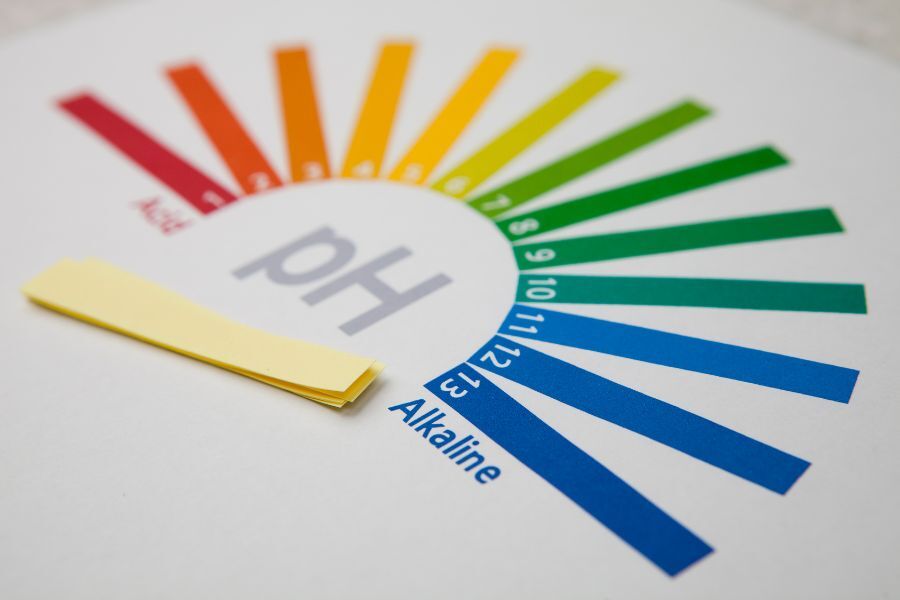
The intimate area is protected by a delicate ecosystem made up of “good” microorganisms that help defend the skin and mucous membranes from irritation and infections. This balance is strongly influenced by pH, an indicator that measures the level of acidity of the skin on a scale from 0 (acidic) to 14 (alkaline).
For both women and men, the best intimate cleanser should have a slightly acidic pH, between 4.5 and 5. This range supports the presence of Döderlein’s lactobacilli, which form one of the most important protective barriers against unwanted microorganisms, and it also helps prevent the growth of bacteria that thrive in more alkaline environments.
That’s why choosing a cleanser that respects the intimate area’s naturally acidic pH is so important: it helps keep the microbiota healthy, reduces irritation and discomfort, and supports everyday comfort.
## What pH should a women’s intimate cleanser have?
Every stage of a woman’s life comes with different needs, but during the fertile years the vaginal microbiota is especially active and sensitive. Lactobacilli produce lactic acid, keeping the pH around 3.8–4.5,an environment that helps protect against the growth of harmful microorganisms. Using intimate cleansers that are too alkaline or heavily fragranced can disrupt this balance and increase the risk of irritation or bacterial vaginosis.

Even within the same menstrual cycle, the pH and sensitivity of the intimate area can change:
**Before your period (follicular phase)**, estrogen levels begin to rise, supporting the growth of lactobacilli and keeping the pH stable and slightly acidic. This is the ideal time to use gentle cleansers that respect this natural balance.
**During your period (menstruation)**, pH may become slightly more alkaline due to menstrual blood, making the mucosa more sensitive. In this phase, it’s best to choose fragrance-free products with a neutral or slightly acidic pH to help reduce the risk of irritation.
**After your period (luteal phase)**, as estrogen levels decrease and progesterone rises, the mucosa may become drier and more delicate. Soothing, hydrating cleansers can help preserve the skin barrier and support the natural bacterial flora.
For this stage of life, we at La Saponaria recommend an intimate cleanser with a pH of **4.5–5**, ideal for keeping the microbiota active and helping prevent discomfort. In case of recurring irritation or yeast infections, a more acidic product with a pH of **3.5** may be helpful, as it is designed to rebalance the vaginal flora.
In general, listening to your body and adapting your cleansing routine to the different phases of the cycle means respecting the intimate area’s natural acidity, preventing irritation, and maintaining everyday comfort.
## What pH should a men’s intimate cleanser have?
Intimate hygiene is essential for men too.
Male genital skin has different characteristics compared to female skin and tends to have a slightly less acidic pH, around **5–5.5**. However, the goal is always the same: to cleanse without damaging the skin barrier or disrupting the local microbiota. It’s important to focus on cleansing the external area only, avoiding harsh or heavily fragranced products that could cause dryness or irritation. Choosing a formula with soothing and hydrating ingredients also helps keep the skin soft, especially in cases of sweating or after physical activity. For optimal hygiene, daily cleansing with lukewarm water and a gentle intimate cleanser is enough, without over-washing, which could upset the area’s natural balance.
## What pH should an intimate cleanser for children have?
Daily skincare for little ones is one of the questions that worries mums and dads the most. Understanding which cleanser is truly suitable for your child isn’t always easy, and it’s common to wonder whether one product is enough for the whole body or if different formulas are needed. Just like adults, babies also need products designed specifically for them. Their skin is much thinner and more delicate, and the urogenital area requires special care from the very first days of life.

The diaper area is exposed to frequent cleansing and constant moisture. In addition, the pH of intimate mucous membranes in children is more neutral than in adults and requires gentle, skin-friendly formulas. That’s why we at La Saponaria recommend intimate cleansers with a pH around **6**, formulated to respect the natural delicacy of little ones’ skin.
## What pH should an intimate cleanser have during pregnancy?
Pregnancy is a unique and extraordinary time, as the body adapts to welcome and support the baby’s development. Hormonal changes can affect the immune system and increase the sensitivity of the intimate area, nothing to worry about, but it’s a good idea to take a little extra care, especially when it comes to intimate hygiene. During these nine months, it’s essential to choose a gentle intimate cleanser with a slightly acidic pH (**4–5.5**) to protect the mucosa, help prevent irritation, and support the natural bacterial flora.
.jpg?width=900&height=600&name=Heading%20(1).jpg)
It’s best to avoid fragrances and harsh ingredients such as:
**Parabens**: widely used preservatives that, when used frequently, may lead to unwanted issues.
**Formaldehyde and formaldehyde-releasing agents**: can irritate delicate mucous membranes.
**Harsh surfactants (SLS, SLES)**: they create foam but can irritate sensitive skin.
**Chemical colorants and synthetic fragrances**: potentially allergenic for the intimate area.
## What pH should an intimate cleanser have postpartum?
Just like during pregnancy, the postpartum period also brings hormonal changes, and the genital area may become more vulnerable. It’s easy to imagine how such a delicate balance can be challenged in the days and weeks following the birth of a baby. The microbiota is under significant stress, so it’s important to care for it with products and habits that help restore the area’s natural acidity.
The ideal intimate cleanser during this phase has a neutral or slightly acidic pH, around **5–5.5**, and can help repair the skin barrier, reduce irritation, and support the return to physiological balance.
## What pH should an intimate cleanser have during premenopause?
During premenopause, hormone levels begin to fluctuate, leading to changes in pH and possible symptoms such as dryness or irritation. In this phase, vaginal pH tends to rise slightly compared to the fertile years, moving closer to values around **4.5–5.5**. For this reason, it’s recommended to choose a gentle, hydrating, and soothing intimate cleanser , free from harsh surfactants, fragrances, and chemical colorants, to help protect the bacterial flora from irritation and infections.
## **What pH should an intimate cleanser have during menopause? **
***.jpg?width=900&height=600&name=Heading%20(2).jpg)***
During menopause, the reduction in estrogen levels and lactobacilli causes the pH to rise toward more neutral values (**5–7**). The intimate area may become drier and more sensitive, increasing the risk of irritation or infections. In this phase, it’s essential to choose gentle intimate cleansers with a neutral or slightly acidic pH, enriched with hydrating and soothing ingredients, to protect the mucosa, support the bacterial flora, and maintain daily comfort and wellbeing. Ideally, a product with a pH around 6 is the best choice.
## **Conclusions**:
In this article, we explained how important it is to choose the right intimate cleanser and how pH plays a key role in protecting your bacterial flora and the wellbeing of your skin. We’ve seen that needs vary depending on gender and different stages of life, from babies to men, from women during their fertile years through to menopause. Every phase requires attention and gentle products formulated to respect the body’s natural balance.
Taking care of intimate hygiene doesn’t simply mean cleansing, it also means helping prevent irritation, supporting the skin barrier, and ensuring everyday comfort.
With the right choices, you can keep your intimate area healthy and protected at every stage of life. And remember: listening to your body and adapting your routine to its needs is the first step toward long-lasting intimate wellbeing.

### Written by Simona
She is La Saponaria’s digital writer: always juggling a newsletter to send and a blog article to publish, she lovingly takes care of our social media channels and our e-commerce.
Facebook
Twitter
Whatsapp
[Mail](mailto:?subject=What%20pH%20should%20an%20intimate%20cleanser%20have?%20The%20complete%20guide%20to%20choosing%20the%20right%20one%20for%20every%20stage%20of%20life&body=Check%20out%20this%20site:%20https://blog.lasaponaria.it/en/insights/what-ph-should-an-intimate-cleanser-have-the-complete-guide-to-choosing-the-right-one-for-every-stage-of-life)
[Organic intimate cleanser: why choose it and what benefits does it really offer](https://blog.lasaponaria.it/en/insights/organic-intimate-cleanser-why-choose-it-and-what-benefits-does-it-really-offer)
[Intimate cleansing: 5 mistakes to avoid for a more respectful, mindful hygiene routine](https://blog.lasaponaria.it/en/insights/en/insights/intimate-cleansing-5-mistakes-to-avoid-for-a-more-respectful-mindful-hygiene-routine)
Leave a comment
All comments
You might be interested in
### Search the blog
This is a search field with an auto-suggest feature attached.
- There are no suggestions because the search field is empty.
### All the categories
- [Insights (91)](https://blog.lasaponaria.it/en/insights/tag/insights)
- [Skin care (30)](https://blog.lasaponaria.it/en/insights/tag/skin-care)
- [Hair care (29)](https://blog.lasaponaria.it/en/insights/tag/hair-care)
- [Body care (13)](https://blog.lasaponaria.it/en/insights/tag/body-care)
- [Beauty routine (11)](https://blog.lasaponaria.it/en/insights/tag/beauty-routine)
- [News (11)](https://blog.lasaponaria.it/en/insights/tag/news)
- [Cura del corpo (8)](https://blog.lasaponaria.it/en/insights/tag/cura-del-corpo)
- [Solari (7)](https://blog.lasaponaria.it/en/insights/tag/solari)
- [Facial Care (6)](https://blog.lasaponaria.it/en/insights/tag/facial-care)
- [Zero waste (6)](https://blog.lasaponaria.it/en/insights/tag/zero-waste)
- [fragrance mists (6)](https://blog.lasaponaria.it/en/insights/tag/fragrance-mists)
- [Cura dei capelli (5)](https://blog.lasaponaria.it/en/insights/tag/cura-dei-capelli)
- [Cura del viso (5)](https://blog.lasaponaria.it/en/insights/tag/cura-del-viso)
- [Guide to ingredients (5)](https://blog.lasaponaria.it/en/insights/tag/guide-to-ingredients)
- [Guida agli ingredienti (4)](https://blog.lasaponaria.it/en/insights/tag/guida-agli-ingredienti)
- [Hair Scalp (4)](https://blog.lasaponaria.it/en/insights/tag/hair-scalp)
- [Natural Make-Up (4)](https://blog.lasaponaria.it/en/insights/tag/natural-make-up)
- [Plastic free (4)](https://blog.lasaponaria.it/en/insights/tag/plastic-free)
- [Ingredients guide (3)](https://blog.lasaponaria.it/en/insights/tag/ingredients-guide)
- [Pure Actives (3)](https://blog.lasaponaria.it/en/insights/tag/pure-actives)
- [Solar (3)](https://blog.lasaponaria.it/en/insights/tag/solar)
- [White Hair (2)](https://blog.lasaponaria.it/en/insights/tag/white-hair)
- [sunscreen (2)](https://blog.lasaponaria.it/en/insights/tag/sunscreen)
- [Ingredient guide (1)](https://blog.lasaponaria.it/en/insights/tag/ingredient-guide)
- [Massage (1)](https://blog.lasaponaria.it/en/insights/tag/massage)
- [Mature skin (1)](https://blog.lasaponaria.it/en/insights/tag/mature-skin)
- [Natural dyes and henna (1)](https://blog.lasaponaria.it/en/insights/tag/natural-dyes-and-henna)
- [Pregnancy (1)](https://blog.lasaponaria.it/en/insights/tag/pregnancy)
- [Solid cosmetic (1)](https://blog.lasaponaria.it/en/insights/tag/solid-cosmetic)
- [Tinte naturali e henné (1)](https://blog.lasaponaria.it/en/insights/tag/tinte-naturali-e-henné)
- [dandruff (1)](https://blog.lasaponaria.it/en/insights/tag/dandruff)
Find out more
### the most read articles
[](https://blog.lasaponaria.it/en/insights/acid-rinse-what-it-is-and-how-to-do-it-to-have-shiny-and-tidy-hair)
## [Acid rinse: what it is and how to do it to have glowing and tidy hair](https://blog.lasaponaria.it/en/insights/acid-rinse-what-it-is-and-how-to-do-it-to-have-shiny-and-tidy-hair)
[](https://blog.lasaponaria.it/en/insights/inci-lists-how-to-read-them-and-all-the-useful-tools-to-decipher-them)
## [INCI lists: how to read them and all the useful tools to decipher them](https://blog.lasaponaria.it/en/insights/inci-lists-how-to-read-them-and-all-the-useful-tools-to-decipher-them)
[](https://blog.lasaponaria.it/en/insights/vegetable-keratin-for-strong-shiny-and-frizz-free-hair.-what-is-it-and-how-to-use-it)
## [Vegetable Keratin for strong, shiny, and frizz-free hair. What is it and how to use it?](https://blog.lasaponaria.it/en/insights/vegetable-keratin-for-strong-shiny-and-frizz-free-hair.-what-is-it-and-how-to-use-it)
[](https://blog.lasaponaria.it/en/insights/hennè-and-natural-hair-dye-answers-to-the-most-common-questions)
## [Henna and Natural Hair Dye: Answers to the Most Common Questions](https://blog.lasaponaria.it/en/insights/hennè-and-natural-hair-dye-answers-to-the-most-common-questions)
[](https://blog.lasaponaria.it/en/insights/organic-shampoo-what-does-it-mean-and-how-to-choose-the-best-natural-shampoo-to-suit-your-needs)
## [Organic shampoo: what does it mean and how to choose the best natural shampoo to suit your needs](https://blog.lasaponaria.it/en/insights/organic-shampoo-what-does-it-mean-and-how-to-choose-the-best-natural-shampoo-to-suit-your-needs)
### [Events Laboratories, digital checkups, courses and consultancy: discover the events of the Biostorie single-brand stores!](https://www.la-saponaria.com/biostorie-flagship-stores)
### [Resellers Become a La Saponaria Reseller and get offers and benefits reserved for you.](https://www.la-saponaria.com/become-a-la-saponaria-reseller)
### [Biostorie - Flagship stores Enter our world: open the La Saponaria flagship store in your city!](https://www.la-saponaria.com/biostorie-flagship-stores)
#### Stay updated on events and products.
#### Subscribe to the newsletter and receive a welcome code!
-
-
-
-
-
#### LA SAPONARIA
- [Philosophy](https://www.la-saponaria.com/philosophy)
- [Sustainability](https://www.la-saponaria.com/sustainability)
- [Sustainable packaging](https://www.la-saponaria.com/sustainable-packaging-)
- [Become our Ambassador](https://www.la-saponaria.com/become-our-ambassador)
- [Blog](https://www.la-saponaria.com/beauty-blog)
- [Accessibility Statement](https://www.la-saponaria.com/accessibility-statement)
#### BUSINESS AREA
- [Become a reseller](https://www.la-saponaria.com/become-a-la-saponaria-reseller)
- [Open a flagship store](https://www.la-saponaria.com/open-a-la-saponaria-flagship-store)
- [Private label cosmetics](https://www.la-saponaria.com/private-label)
- [Accommodation facilities](https://www.la-saponaria.com/accommodation-facilities)
- [G.A.S.](https://www.la-saponaria.com/gruppi-di-acquisto-solidale)
#### CERTIFICATIONS




#### ACCOUNT AND ORDERS
- [My account](https://www.la-saponaria.com/login?back=my-account)
- [Promotions](https://www.la-saponaria.com/special-offers)
- [Nearest shop](https://www.la-saponaria.com/store-locator)
- [FAQ](https://www.la-saponaria.com/faq)
- [Quick order](https://www.la-saponaria.com/quick-order)
- [Conditions of sale](https://www.la-saponaria.com/conditions-of-sale)
#### CONTACT US
From Monday to Friday
09:00 - 13:00 | 15:00 - 17:00
[+39 0721 911 004](tel:0390721911004)
[+39 377 38 44 777](tel:0393773844777)
[info@lasaponaria.it](mailto:info@lasaponaria.it)
[Location and contacts](https://www.la-saponaria.com/contact-us)
    

LA SAPONARIA SRL SOCIETÀ BENEFIT - via Dei Trasporti, 3-5 - Pesaro (PU) - P.IVA/C.F. 02394310417 - Capitale sociale € 90.000,00 IV - Iscritto al registro imprese della CCIAA di Pesaro e Urbino - **[Privacy & Cookie Policy](https://www.lasaponaria.it/privacy-policy)**
```json
{
"@context" : "https://schema.org",
"@type" : "BlogPosting",
"author" : {
"@type" : "Person",
"name" : "Simona",
"url" : "https://blog.lasaponaria.it/en/insights/author/simona"
},
"dateModified" : "2026-01-15T14:25:20.542Z",
"datePublished" : "2026-01-15T14:25:20.000Z",
"headline" : "What pH should an intimate cleanser have? The complete guide to choosing the right one for every stage of life",
"image" : [ "https://blog.lasaponaria.it/hubfs/pH_cartina-al-tornasole.jpg" ],
"mainEntityOfPage" : {
"@id" : "https://blog.lasaponaria.it/en/insights/what-ph-should-an-intimate-cleanser-have-the-complete-guide-to-choosing-the-right-one-for-every-stage-of-life",
"@type" : "WebPage"
},
"publisher" : {
"@type" : "Organization",
"logo" : {
"@type" : "ImageObject",
"url" : "https://blog.lasaponaria.it/hubfs/Logo%20La%20Saponaria.jpg"
},
"name" : "La Saponaria srl"
}
}
```